

Get Quote Now!
The All-Female Wedding Photography Team for Complete Parda-Compliant Coverage for Nikkah (Muslim Weddings). We are one of the few premium studios in India offering a 100% Female Production Team for the bride’s side.
1. Female Lead Photographers
2. Female Cinematographers (Video)
3. Female Lighting Assistants
Our Co-founder and Lead Photographer, Ankita, has extensively covered Muslim weddings in multiple cities including Indore, Bhopal, Mumbai, Pune, Udaipur, Hyderabad, Lucknow and more.
From the emotional Rukhsati to the joyful Mehendi, and the solemnity of the Nikkah, our team knows exactly where to be and how to move respectfully within gender-segregated spaces. We ensure that the bride and her guests feel completely at ease to remove their veils and celebrate freely, knowing their privacy is guarded by a team of professional women.
Contact us today to get a quote for your Nikkah and Walima.
The Ultimate Guide to Hiring a Female Wedding Photographer for Muslim Weddings: Parda, Privacy, and Perfection
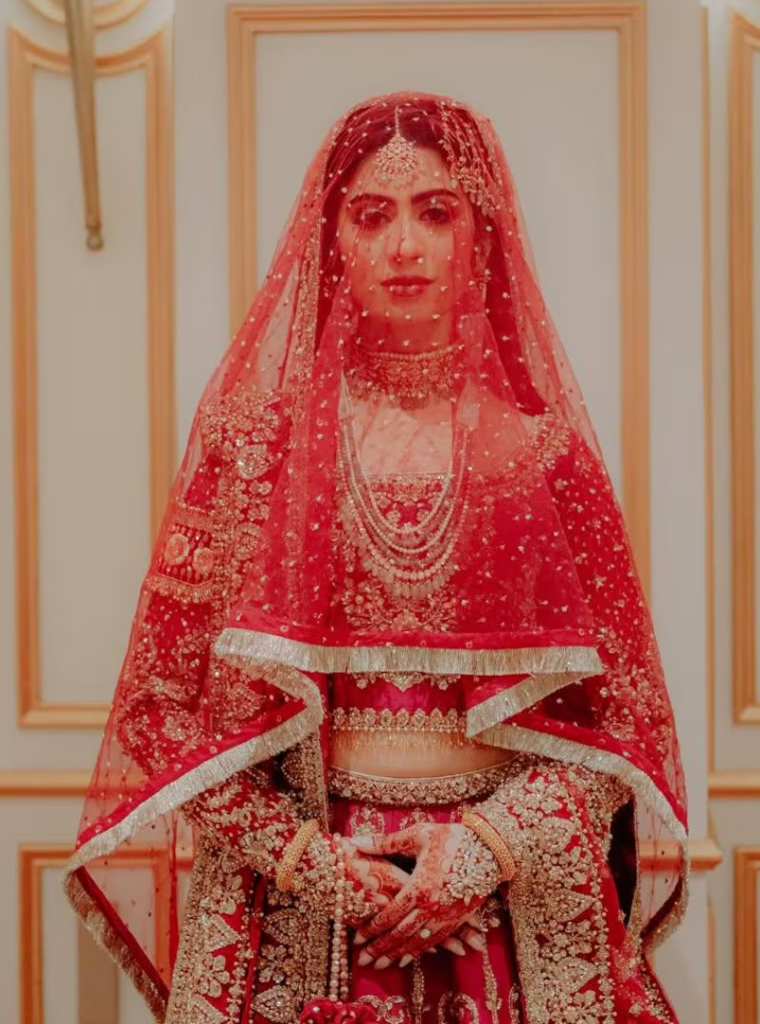
Introduction: The Intersection of Faith, Privacy, and Art
A wedding is a universal celebration of love, but the way that love is celebrated varies deeply across cultures. In the rich, textured world of Islamic weddings, the celebration is balanced by Haya (modesty) and Adaab (etiquette). For many Muslim families, the wedding day is a duality: it is a public announcement of a union, yet it contains moments of profound privacy that are strictly reserved for the family’s inner circle.
In recent years, a significant gap has emerged in the Indian wedding photography market. As weddings have become more cinematic and documented, families who observe strict Parda (separation of genders) have faced a difficult choice. Do they hire a high-end male crew and compromise their privacy, forcing women to remain veiled even in the Zenana (ladies’ section)? Or do they hire a lower-tier amateur female photographer just to satisfy the gender requirement, often sacrificing the quality of the memories?
At The Sillage, we believe this is a choice you should never have to make.
Led by our co-founder and lead photographer, Ankita, we have pioneered a service that offers the best of both worlds: Luxury, cinematic wedding documentation delivered by a 100% All-Female Production Team.
This comprehensive guide is designed to help you understand why hiring a specialized female team is crucial for your Nikkah, how we operate within the boundaries of Sharia and tradition, and why we are the preferred choice for Muslim families across Indore, Bhopal, Mumbai, and Pune.
Chapter 1: The Cultural Necessity of a Female Photographer
The search for a “lady photographer for wedding” is not just about preference; for many, it is about religious compliance and comfort.
1. Respecting the Mahram and Non-Mahram Dynamic
In Islamic tradition, the distinction between Mahram (family members one cannot marry) and Non-Mahram (marriageable strangers) is vital. A male photographer, no matter how professional, is a Non-Mahram. His presence in the ladies’ section means that women who observe Hijab or Niqab cannot remove their coverings.
The Impact: If a male photographer is present, the photos will only show the “public” version of the guests—veiled and guarded.
The Female Advantage: With an all-female team, the dynamic shifts instantly. Aunts, cousins, and friends can remove their veils, let their hair down, and celebrate freely. The laughter is louder, the smiles are wider, and the photos are infinitely more authentic because the guard is down.
2. Access to the Inner Sanctum (The Zenana)
Historically, the Zenana was the part of the house reserved for women. In modern weddings, this translates to the bride’s getting-ready room, the ladies’ sangeet hall, or the partitioned side of the marquee. A male photographer is physically barred from these spaces. He cannot capture:
– The bride fixing her jewelry with her mother.
– The emotional, tearful hugs between sisters before the Baraat arrives.
– The intricate process of draping the Dupatta or setting the Jhoomar. Our female team has the “Golden Ticket.” We move seamlessly between these spaces, capturing the narrative arc of the bride’s day without ever halting the flow of events or asking permission to enter.
3. The “Be-Parda” Moments
“Be-Parda” means “without veil.” Some of the most stunning wedding photography happens when the subject is completely at ease. The “Female Gaze” allows us to capture beauty without objectification. We understand the nuances of modesty. We know how to pose a bride so she looks regal and elegant, rather than uncomfortable or overly exposed.
Chapter 2: Defining the “All-Female Team” (It’s Not Just One Person)
A common misconception is that hiring a “female photographer” solves the problem. But a wedding production requires more than one person. It requires a team. Many studios will send a female lead shooter, but she will be accompanied by a male videographer or a male lighting assistant. This defeats the entire purpose of Parda.
At The Sillage, when we say “All-Female Team,” we mean it. Here is the breakdown of our specialized crew:
1. The Lead Female Photographer (Ankita)
She directs the visual story. She is responsible for the bride’s portraits, the key family moments, and the artistic direction. She communicates with the bride to ensure she is comfortable and looks her best.
2. The Female Cinematographers (Video Team)
This is where most studios fail. Finding high-quality female cinematographers is difficult in India. We have curated a team of skilled women who are experts in:
Gimbal Operation: For those smooth, cinematic walking shots.
Slider Shots: For revealing details of the jewelry and decor.
Candid Video: Capturing moving moments without being intrusive. You do not need to hire a separate male team for video. We handle it all in-house.
3. Female Lighting Assistants
Lighting is the backbone of photography. In a dark banquet hall or a marquee at night, we need external lights. Usually, heavy lifting of light stands is done by male assistants. At The Sillage, our female crew is trained to handle professional lighting setups independently. We ensure the lighting is flattering and three-dimensional without requiring a man to step in to adjust a stand.
Chapter 3: Detailed Coverage of Muslim Wedding Rituals
Our team is deeply experienced in the specific flow of Muslim weddings. We know the names of the rituals, their significance, and—most importantly—when they are about to happen.
1. The Pre-Wedding Rituals (Manjha / Mayoon / Haldi)
The Manjha or Mayoon is a ritual of beautification. The bride is anointed with turmeric (Haldi) and sandalwood. It is a messy, joyous, and strictly intimate affair.
Our Approach: Since the bride often wears simpler, sleeveless, or more casual clothing during this ritual, a male photographer is strictly forbidden. Our female team captures the raw, messy joy—the yellow stains on cheeks, the flower showers, and the sheer fun of the cousins—while ensuring the bride feels safe.
2. The Mehendi (The Night of Henna)
The Mehendi is the canvas of the wedding. It is a night of songs (Dholki) and art.
The Shot List: We focus on the details. The macro shots of the wet henna paste, the hidden name of the groom in the design, and the bride’s patience as she sits for hours. We also capture the elder women singing traditional folklore songs, a heritage that is slowly fading and needs to be documented.
3. The Nikkah (The Solemn Contract)
The Nikkah is the heart of the event. It is a legal and spiritual contract.
The Segregated Nikkah: In many weddings, the bride and groom are in separate rooms or separated by a curtain. We station our Female Team with the bride to capture her Qubool Hai (I accept), while our Associate Male Team (if hired) stays with the groom.
The Partition Shot: One of our signature shots is capturing the couple on either side of the partition—close, yet separated by tradition—communicating via a mirror or holding hands under the curtain.
4. The Arsi Mushaf (Mirror Ceremony)
After the Nikkah, the couple sees each other for the first time as husband and wife, often via a mirror placed on their laps, covered by a shawl.
Our Strategy: This is a very tight, intimate moment involving the couple and immediate family. We use silent shutters and non-intrusive lenses (85mm or 50mm) to capture the reflection in the mirror—the shy smiles and the first eye contact—without hovering over the couple and ruining the moment.
5. The Rukhsati (The Farewell)
This is the crescendo of emotion. It is the transition from daughter to wife.
Emotional Intelligence: This is where being a woman helps. We understand the gravity of a mother letting go of her daughter. We don’t ask people to “smile” during the Rukhsati. We respect the tears. We document the Quran being held over the bride’s head, the final embrace, and the car driving away, maintaining a respectful distance.
Chapter 4: Technical Excellence in Conservative Settings
One fear clients have is: “If I hire an all-female team, will the quality be as good as the big male-dominated production houses?”
The answer is: Yes, and often better.
1. Gear Parity
Cameras do not know gender. We use the exact same flagship equipment used by the top male cinematographers in the world:
Cameras: Sony A7SIII and A7IV (Mirrorless, Silent Shutter)
Lenses: Sony G-Master Prime Lenses (f/1.2 and f/1.4) for creamy bokeh and superior low-light performance.
2. Silent Shooting for Prayer Times
Muslim weddings often pause for Namaz (Prayer). We respect this. Our cameras have silent shutters. When the Adhan sounds, or when the congregation stands for prayer, we stop shooting or shoot silently from the back, ensuring we never disturb the sanctity of the worship.
3. Lighting the Hijab and Makeup
Lighting a bride in a Hijab requires skill. We know how to position lights so they don’t create harsh shadows under the scarf (the “raccoon eye” effect). We use softboxes and diffusers to create a glow that highlights the bride’s face while keeping the Hijab’s texture rich and detailed.
Chapter 5: Privacy Protocols & The “Sisterhood of Security”
We treat your data with the same protectiveness we would want for our own sisters.
1. The Data Chain of Custody
From the moment the shutter clicks to the moment the hard drive is stored, the data from the ladies’ section is handled meticulously.
Memory Cards: Labeled “Ladies Side” and kept in a separate case.
Backups: Backed up on offline hard drives (not the cloud) to prevent internet leaks.
2. Female Editors & Post-Production
This is a service unique to The Sillage. Most studios shoot with a female but hand the footage to a male editor in the back office. We offer a Female Editing Service.
Culling: A female editor goes through the raw footage.
Selection: Any clip or photo where a guest has their veil slipped or looks compromised is deleted permanently.
Final Cut: The final video is also edited by women. If a male colorist is required for the final grade, we ensure only “Safe” shots (where everyone is fully covered) are passed to him, or we handle the grading ourselves.
3. The Social Media Policy
We are an Instagram-first brand, but NOT at the expense of your privacy.
No Posting Without Consent: We have a strict clause. We will never post a photo of the bride or female guests unless you sign a specific “Model Release.”
Partial Sharing: Some clients allow us to post detail shots (hands, jewelry, decor, back of the dress) while keeping faces private. We are happy to accommodate this.
Chapter 6: Locations We Serve
While we are headquartered in Indore, our demand takes us across Western and Central India.
Female Wedding Photographer for Muslim Wedding in Indore
Indore is our home. We know the lighting conditions of every major venue, from the grand ballrooms of the Brilliant Convention Centre to the intimate lawns of Jalaria and Sayaji. We are familiar with the specific traditions of the Indori Bohra and Sunni communities. If you are looking for a female photographer in Indore, we are the local experts.
Female Wedding Photographer for Nikkah in Bhopal
Bhopal, the city of Nawabs, hosts some of the most elegant Muslim weddings in India. We frequently travel to Bhopal to cover Nikkahs at venues like the Jehan Numa Palace and Noor-Us-Sabah. We understand the “Bhopali Parda” and the refined etiquette required in these historic settings.
Female Wedding Photographer for Walima in Mumbai
Mumbai weddings are fast-paced and glamorous. Whether it’s a Nikkah at a masjid in Bandra or a reception at the Taj Lands End, our team brings the “Indore Warmth” with “Mumbai Professionalism.” We handle the logistics of travel and accommodation seamlessly.
Female Wedding Photographer for Parda Wedding in Pune
Pune has a thriving community that values art and culture. We have covered beautiful weddings in Koregaon Park and Kalyani Nagar, providing bespoke services for families who want a modern aesthetic with traditional values.
Chapter 7: Frequently Asked Questions (FAQ)
Q1: Can we hire ONLY the female team for the bride, and use a different team for the groom?
A: Yes, absolutely. We are happy to collaborate. We will coordinate with the Groom’s team to ensure the lighting and style match, but we will stay strictly on the Bride’s side.
Q2: My wedding is in a very small house/apartment. Can you still shoot?
A: Yes. In fact, female photographers are better for tight spaces. We are used to maneuvering in small makeup rooms. We use wide-angle lenses to make small spaces look grand without being intrusive.
Q3: Do you cover Destination Weddings for Muslim families?
A: Yes. Destination weddings (in Jaipur, Udaipur, Goa) often pose a privacy challenge as they are in public resorts. We act as your privacy enforcement. We can scout locations in the resort that are secluded for your “unveiled” portraits, ensuring no other hotel guests are watching.
Q4: How far in advance should we book?
A: Because an all-female video and photo team is a rare resource, our dates fill up very fast—often 6 to 8 months in advance. We highly recommend booking as soon as your Nikkah date is fixed.
Q5: Do you do “Pre-Wedding” shoots for Muslim couples?
A: Yes, but we do them tastefully. We understand that public displays of affection (PDA) might not be culturally appropriate. We focus on “Courtship Shoots”—capturing the chemistry through conversation, walking together, and subtle glances, rather than uncomfortable posing. We can suggest secluded locations where you can be comfortable.
Conclusion: Your Heritage, Your Privacy, Your Story
You have spent months planning your wedding. You have chosen the perfect outfit, the perfect venue, and the perfect menu. Do not let the choice of photographer be the weak link that compromises your comfort.
At The Sillage, we are more than just camera operators. We are the guardians of your memories and the protectors of your privacy. We allow you to be you—unveiled, uninhibited, and unapologetically joyful—knowing that you are being captured by a team of women who understand, respect, and celebrate you.
Don’t compromise. Choose the team that respects your Parda as much as you do.
Get Quote Now!
Contact Us or Check out our Instagram @thesillage.in
More Guides To Help You Plan Your Dream Wedding:
The Ultimate Indian Wedding Timeline
How to Look Natural in Wedding Photos (Even If You Hate Posing)
Best Wedding Photographer in Indore | Candid and Luxury Wedding Photography
Indian Wedding Photography and Film Shoot Checklist
Wedding Photographer Charges in India: The Ultimate 2026 Guide
The Ultimate Guide to Luxury Wedding Photography
Top Locations
Top 20 Indore and Nearby Pre Wedding Photoshoot Locations & 10 Best Couple Photoshoot Ideas for Your Pre Wedding Shoot
Keywords: Female wedding photographer Indore, Muslim wedding photography India, Lady photographer for Nikkah, All female wedding video team, Parda compliant photography, Wedding photographer Bhopal, Wedding photographer Mumbai, Female cinematographer, Nikkah, Walima, Parda Wedding, Islamic Weddings